Contemporary attitudes to death range from denying its inevitability — in transhumanist quests for immortality, as exemplified by millionaire Bryan Johnson’s Don’t Die movement — to expediting death as one rational option among many — visible, for example, in moves to legalise assisted suicide. If these are two sides of the same coin — one offered to Charon for his ferrying the soul across the Styx, perhaps — the moment of death itself is a void in our understanding. Drawn as it might be to the idea of death, the conscious mind today cannot comprehend the thing itself, rendering it a black hole that consumes all imagination.
The traditions of memento mori and ars moriendi have been exiled from the cultural horizon. Yet death refuses to go gently and reasserts itself in our self-annihilatory unconscious pursuits, practised by individuals and cultures alike. Even as a black hole, the instant of death is solar, hovering on the threshold of ecstasy at which the drive towards survival is overcome, abandoned, or dispossessed by force.
What can standing at the threshold of death, when its immediacy is certain yet indeterminate, tell us about living? What will the human look like when death has been destroyed, when we are no longer individuated by our relentless drive to preserve our lives? How does self-destruction reveal death’s supernatural potential? And how can we speak about death at all when our lives, those spent in peace and safety, are ordinarily distant from its reality?
The symposium brings together multiple contemplative traditions, ranging from Vedic myth to accelerationism and from posthumanism to Christian eschatology. Between them, they grant the unthinkable instant of death a before and after.
Symposium programme
Maya Pettersen
The Articulation of Mortality: Solar Death in the Ṛgveda
Pettersen’s presentation examines solarity, form, time, and death in early Vedic thought, and the paradoxes that arise between them. Focusing on Mārtāṇḍa, Uṣas, Vivasvat, and Yama, Pettersen will discuss how, in the Vedic cosmology, the Sun does not symbolize the cyclical rise and descent from life into death as rebirth, but inaugurates mortality by making existence visible, measurable, differentiated, and finite.
To expand on the Vedic philosophy of solar finitude, Pettersen refers to systems theory and notions of sacrifice and solar excess. In this logic, death is not life’s opposite, but a condition latent in organisation itself: the boundary that allows something to become itself is also the precondition of all dissolution. The birth of the sun is also the birth of death, and thus the beginning of all time and mortality within Vedic myth and metaphysics.
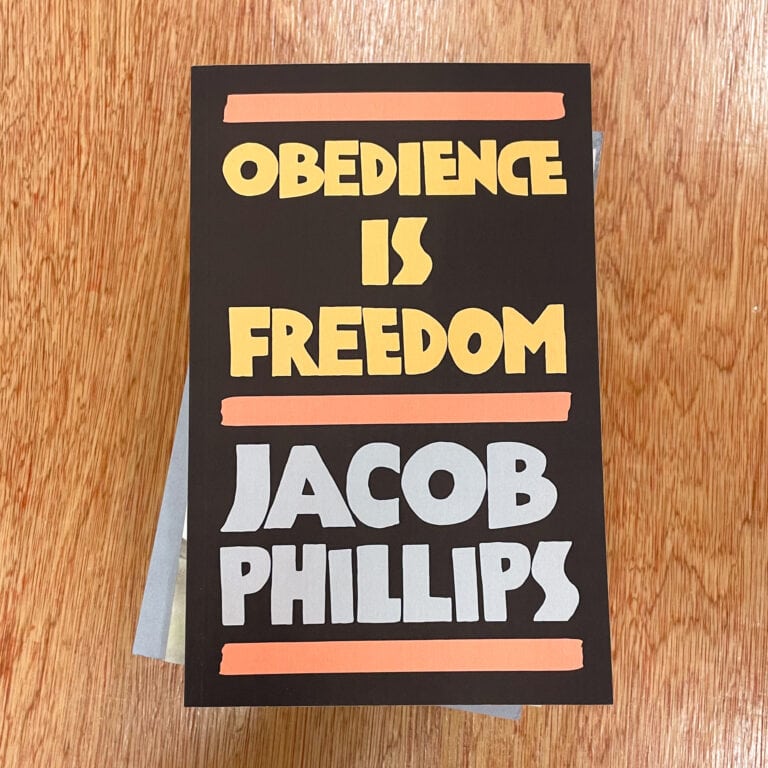
Jacob Phillips
Cultivating Death in Life
Countries which have legalised assisted dying usually begin with tight regulations around the practice, which are gradually weakened until it becomes a major cause of death within their populations.
Phillips’s talk explores how attempts to soften death’s sting invariably result, paradoxically, in a similar amplification of death’s power.
On this evidence, it must also be true that an honest acceptance of the uncontrollable reality of death amplifies life’s power, which, in turn, means that cultivating a sense for one’s death bears much promise for learning how to live.
Rose Lyddon
Martyrdom and eschatology
The persistence of martyrdom in early medieval theology was the definitive sign of eschatological escalation. A march towards ‘the end’ required the transformation of martyrdom into new types of sanctity. It gave rise to notions of ‘white martyrdom’ or ‘living martyrdom’ of virginity or asceticism after state persecution of Christians ceased.
This association extended into the temporal realm, with homilists around the end of the first millennium preaching that the sufferings of those on earth would be intensified relative to the remaining time in the world’s sixth age. The world to come was imagined as being populated entirely by martyrs or by saints who had demonstrated suffering or renunciation in life equivalent to martyrdom.
This sanctity reveals the Kingdom of God itself. What is it in the nature of the martyr and the love they embody that allows their entry into the Kingdom? What sort of person is the saint and what does it mean for a person to transcend self-preservation but retain a particular and distinct self?
David Roden
The Death of Posthuman Life
Posthumanism is often presented as a philosophy of life — life considered not from the perspective of the privileged human subject, but a vital process, extravagantly mutant, alive to joyful new affiliations and ‘cyborg’ couplings. Posthuman life, according to Rosi Braidotti, is intense and joyful.
Understood this way, Posthumanism promises an egalitarian approach to our planetary existence, a basis for interspecies justice for which humans are no longer the privileged players on Earth.
However, Roden will argue that our posthuman condition is perversely negative and death-driven, but, maybe, that this is a good thing.
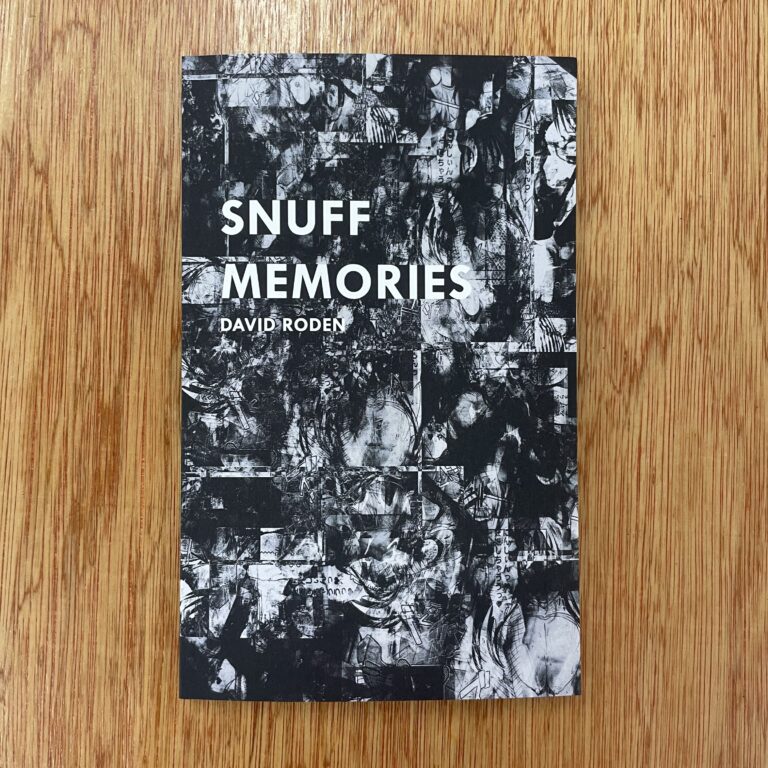
Roden will unpack this posthuman death drive by looking at some of its avatars in artists such as J G Ballard (Crash), Katy Mongeau (Apostasy), Julia Ducournau (Titane) and his own writing (Snuff Memories and Xenoerotics).
Show more +The Instant of My Death is organised with Rose Lyddon. Special programme assistance: Kit Ramsay.